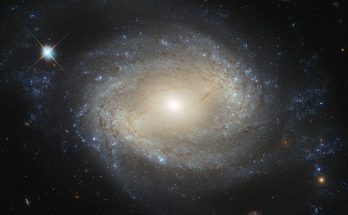
dark matter particles may have their own periodic table, a groundbreaking idea that could change our understanding of the universe. Scientists are exploring the implications of this theory.
What Are Dark Matter Particles?
Dark matter particles are hypothetical elementary particles that comprise a significant portion of the universe’s mass, yet remain undetected by traditional means. Unlike ordinary matter, which makes up stars, planets, and living beings, dark matter does not interact with electromagnetic forces, making it invisible and difficult to study. Scientists estimate that dark matter accounts for about 27% of the universe, while ordinary matter constitutes only about 5%.
These elusive particles are believed to exist in vast quantities throughout the cosmos, exerting gravitational forces that influence the movement of galaxies and galaxy clusters. While their existence has been inferred through various astrophysical observations, their precise nature remains a mystery.
Recent research suggests that dark matter might consist of a variety of different particles, potentially leading to a new classification system akin to the periodic table used for visible elements. This concept proposes that these dark matter particles could exhibit unique properties and interactions, which could be uncovered through advanced scientific techniques.
Some leading candidates for dark matter particles include:
- Weakly Interacting Massive Particles (WIMPs): Heavier particles that could interact through weak nuclear force.
- Axions: Light particles proposed to solve various theoretical issues in physics.
- Sterile Neutrinos: A heavier type of neutrino that does not interact with normal matter.
Understanding dark matter particles is crucial for unraveling the mysteries of the universe’s formation and structure.
The Science Behind Dark Matter
The study of dark matter particles has captivated scientists for decades, as they seek to unlock the mysteries of the universe. These elusive particles are believed to make up about 27% of the universe’s total mass-energy content, yet their exact nature remains largely unknown.
Researchers have proposed various candidates for dark matter particles, including:
- WIMPs (Weakly Interacting Massive Particles): These hypothetical particles are among the most studied candidates, predicted to interact through the weak nuclear force and gravity.
- Axions: Another leading candidate, axions are lightweight particles that may help explain certain phenomena in quantum mechanics.
- Simplified models: Some scientists are exploring simplified models that introduce new particles with unique properties, thereby expanding our understanding of dark matter.
Recent advancements in technology and detection methods have allowed scientists to probe deeper into the nature of dark matter. Experiments like the Large Hadron Collider and various underground laboratories are at the forefront of this research.
Moreover, the idea that dark matter might possess its own periodic table of invisible particles opens up exciting avenues for exploration. As researchers continue to unravel the properties and behaviors of dark matter particles, they inch closer to answering fundamental questions about the cosmos.
Implications of a Periodic Table
The discovery of a potential periodic table for dark matter particles could revolutionize our understanding of the universe. This new framework suggests that just as ordinary matter is organized into a periodic table based on atomic structure, dark matter could also be arranged according to its own fundamental properties.
Scientists believe that dark matter particles may have a variety of characteristics that influence their interactions and behaviors. Each type of dark matter particle could play a unique role in the cosmic structure and evolution of the universe. The implications of such a classification are profound:
- Enhanced Understanding: A periodic table for dark matter particles could help scientists identify the missing pieces of the cosmic puzzle, shedding light on the nature of dark matter itself.
- Predictions of Interactions: By categorizing these particles, researchers may predict how they interact with regular matter and with each other, providing insights into potential detection methods.
- Guiding Experiments: This framework could guide future experiments and observational campaigns, aiding in the search for dark matter and its elusive properties.
Furthermore, understanding the relationships between different dark matter particles might unlock answers to some of the universe’s most pressing questions, such as the formation of galaxies and the distribution of cosmic structures. As research progresses, the implications of a periodic table for dark matter particles could extend far beyond theoretical physics, impacting our comprehension of the universe itself.
How Dark Matter Affects the Universe
The influence of dark matter particles extends far beyond their elusive nature, playing a crucial role in shaping the universe as we know it. These mysterious entities account for nearly 27% of the universe’s total mass-energy content, yet remain largely undetectable through traditional means. Understanding their effects is essential for grasping the broader cosmic structure.
One significant impact of dark matter particles is their gravitational pull, which helps to bind galaxies together. Without this unseen mass, galaxies would likely drift apart, unable to maintain their formation. Scientists believe that dark matter acts as a scaffolding, providing the necessary framework for visible matter to accumulate and form stars, planets, and galaxies.
Additionally, dark matter’s presence influences the cosmic microwave background radiation—the afterglow of the Big Bang. Variations in this radiation can be attributed to the gravitational effects of dark matter particles, offering insights into the early universe’s conditions and growth patterns.
Furthermore, research into dark matter particles has sparked the possibility of a new periodic table of invisible particles. This could revolutionize our understanding of fundamental physics and lead to groundbreaking discoveries about the universe’s composition.
As ongoing investigations continue to reveal the complex interplay between dark matter and visible matter, scientists hope to unlock the secrets of this enigmatic component of the cosmos.
Recent Discoveries in Particle Physics
Recent advancements in particle physics have shed light on the elusive nature of dark matter particles, igniting excitement among scientists and researchers worldwide. A recent study proposed that dark matter may not just be a singular entity but could have its own periodic table, akin to the one familiar in chemical elements.
This groundbreaking concept suggests that various types of dark matter particles may exist, each with distinct properties and interactions. Researchers have been investigating several candidates for these particles, including:
- Weakly Interacting Massive Particles (WIMPs): These are among the most studied dark matter candidates, thought to interact through the weak nuclear force.
- Axions: Hypothetical particles that could solve several theoretical problems in physics, particularly in relation to quantum chromodynamics.
- Sterile Neutrinos: More mysterious than their active counterparts, these particles could account for some of the dark matter in the universe.
Each of these particles could help explain the gravitational effects observed in galaxies and galaxy clusters. As new technologies and detection methods emerge, the hope is to finally observe these dark matter particles directly, providing clarity to the mysteries of the cosmos.
With ongoing research, the dream of understanding dark matter particles and their role in the universe may be closer than ever before.
Future Research Directions
The quest to understand dark matter particles is entering a new phase as researchers propose various directions for future investigations. The complexities surrounding these elusive particles have led scientists to explore a range of innovative methodologies and technologies.
One prominent area of research involves the development of advanced particle detectors. These devices are designed to enhance the sensitivity and accuracy of measurements, allowing scientists to potentially observe dark matter particles directly.
Another direction is the exploration of cosmic rays, which may provide indirect evidence of dark matter interactions. By analyzing the high-energy particles that penetrate the Earth’s atmosphere, researchers aim to uncover clues about the properties and behaviors of dark matter particles.
Additionally, theoretical physicists are working to refine models that describe dark matter’s role in the universe. This includes the possibility of a periodic table of dark matter particles, which could categorize these unknown entities based on their mass and interaction types.
Furthermore, collaborations between international laboratories are expected to yield significant advancements. By pooling resources and expertise, scientists can tackle the challenges of detecting and understanding dark matter more effectively.
In summary, the future of dark matter research is promising. With each new discovery, scientists move closer to unraveling the mysteries surrounding dark matter particles and their impact on the universe.
By Jurassic Blueberries via Openverse