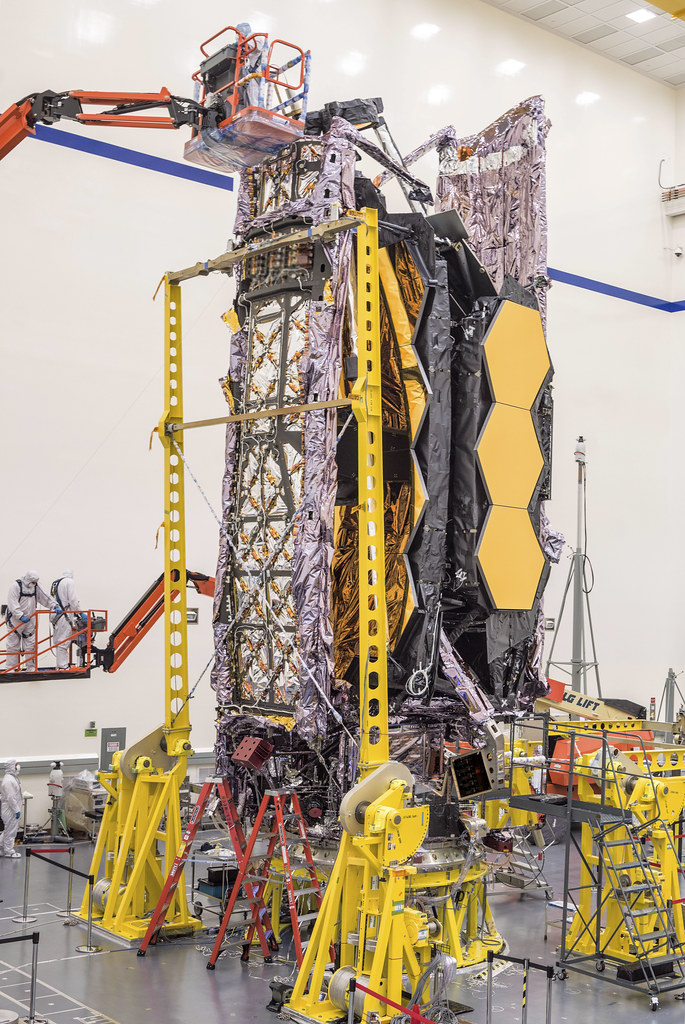
James Webb Space Telescope has unveiled intriguing findings about the mysterious Little Red Dots. These phenomena may be overfeeding black holes, leading to significant implications for our understanding of the universe.
Understanding the Little Red Dots
The James Webb Space Telescope has provided astronomers with unprecedented insights into the universe, particularly in understanding the phenomenon of black holes. One of its most intriguing discoveries involves the so-called “Little Red Dots.” These dots, identified in distant galaxies, are believed to represent regions of intense star formation.
Recent studies suggest that these areas may be overfeeding black holes, leading to significant growth in their mass. This connection is critical for understanding how black holes evolve and influence their surrounding environments. The findings indicate that:
- Little Red Dots are often located near the centers of galaxies.
- They contribute to the accretion of gas and dust, fueling black hole activity.
- This phenomenon may impact the overall structure and behavior of galaxies.
As researchers continue to analyze data from the James Webb Space Telescope, the implications of these Little Red Dots could reshape our understanding of cosmic evolution and the role of black holes in the universe.
How Black Holes Are Affected
The discovery of the Little Red Dots by the James Webb Space Telescope has opened new avenues for understanding how black holes are affected by their surroundings. These mysterious objects, which are believed to be young galaxies, seem to be feeding black holes at an unprecedented rate.
Researchers have observed that:
- Increased Accretion: The Little Red Dots may be supplying material to black holes, leading to a rapid increase in their mass.
- Galactic Mergers: These galaxies might be merging with others, causing gravitational interactions that further enhance black hole growth.
- Radiation Emissions: As black holes consume more material, they emit intense radiation, which can affect star formation in nearby regions.
This interplay raises important questions about the evolution of galaxies and their central black holes. The insights gained from the James Webb Space Telescope not only deepen our understanding of cosmic phenomena but also challenge existing theories about black hole formation and behavior.
The Science Behind Overfeeding
The James Webb Space Telescope has provided unprecedented insights into the cosmic phenomena surrounding black holes. One of the most intriguing aspects observed is the concept of “overfeeding.” This occurs when a black hole accumulates more matter than it can efficiently consume, leading to significant implications for its growth and the surrounding environment.
Researchers have identified several factors contributing to this overfeeding, including:
- Accretion Disks: The swirling disks of gas and dust that form around black holes can become overly dense, allowing for excessive material to be drawn in.
- Environmental Factors: The presence of nearby celestial bodies can influence the rate at which matter is supplied to a black hole.
- Stellar Winds: Powerful winds from massive stars can funnel additional gas into the black hole’s vicinity.
These findings suggest that the dynamics of black hole feeding are more complex than previously thought, revealing new layers of interaction in the universe. The James Webb Space Telescope continues to unravel these mysteries, reshaping our understanding of cosmic evolution.
Recent Discoveries by NASA
NASA’s recent findings from the James Webb Space Telescope have shed new light on the enigmatic behavior of black holes. These discoveries are reshaping our understanding of how black holes interact with their surroundings and influence the universe. The telescope’s advanced capabilities have allowed scientists to observe phenomena that were previously hidden from view.
Among the significant revelations are the following:
- Unexpected Growth Patterns: Some black holes appear to be growing at rates much faster than anticipated, suggesting that they are consuming vast amounts of matter.
- Environmental Impact: The interactions between black holes and nearby stars can lead to unexpected gravitational effects, influencing star formation in their host galaxies.
- New Insights on Dark Matter: The data collected may provide clues about the role of dark matter in the formation and behavior of black holes.
As researchers continue to analyze the data, the James Webb Space Telescope is poised to revolutionize our understanding of the cosmos and the vital role black holes play within it.
Implications for Future Research
The findings from the James Webb Space Telescope have profound implications for future research on black holes. As scientists continue to analyze data from this powerful observatory, several key areas emerge that warrant further exploration.
- Understanding Black Hole Growth: The telescope’s observations may provide insights into how black holes evolve over time, potentially redefining existing theories.
- Galaxy Formation: By studying the interactions between black holes and their surrounding environments, researchers can better comprehend the role of black holes in galaxy formation and development.
- Dark Matter and Energy: The data may also shed light on the relationship between black holes and the enigmatic forces of dark matter and dark energy, which remain largely mysterious to scientists.
- Refining Models: New discoveries could lead to the refinement of astrophysical models, allowing for more accurate simulations of cosmic phenomena.
As the James Webb Space Telescope continues its mission, the potential for groundbreaking discoveries in the field of black hole research remains immense.
By James Webb Space Telescope via Openverse